 Leak Fix Pros
Insurance Leak Detection Reports in Whittier, CA
When a leak causes damage, your insurer will want to know where it started and what it was. A clear report from a leak detection provider answers both questions.
Short answer: An insurance leak detection report documents what was found, where, how it was found and when. It usually includes the leak location, the pipe or fixture involved, the method used, photos and readings, and the provider's findings. Whether a claim is paid depends on your policy, not on the report alone.
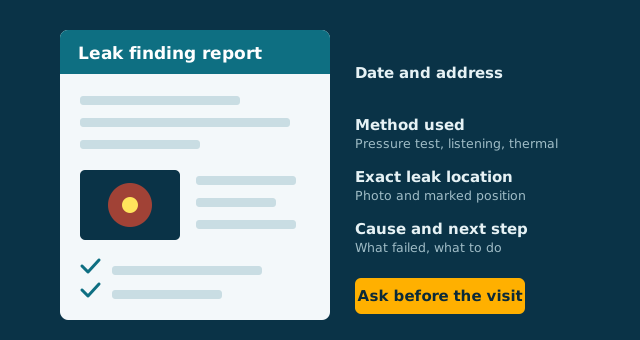
What a useful report contains
- Date, address and who requested the inspection.
- A description of the symptoms and what was tested.
- The methods used, such as pressure testing, listening, thermal imaging, moisture readings or tracer gas.
- The exact location of the leak, with photos or a marked diagram.
- The pipe, fitting or fixture that failed, if it could be identified.
- The provider's conclusion about the cause and the recommended next step.
- Provider contact details and license information for any repair work.
If you know you will file a claim, tell the provider when you call. They can structure the visit to capture what the adjuster is likely to ask. See leak detection methods for what each tool can and cannot prove.
Before you call the insurer
- Stop the water if you can safely do so by closing the main valve. Policies generally expect you to prevent further damage.
- Take photos and videos of the damage before moving or cleaning anything.
- Contact your insurer or agent early and ask what they require, how a claim starts and whether they have preferred vendors.
- Keep damaged materials if the adjuster wants to see them, and keep receipts for emergency measures.
- Get a written leak finding from a provider, along with a repair estimate.
Policies differ. Many cover sudden and accidental water damage but may exclude damage from long-term seepage, wear or deferred maintenance, and some exclude the cost of reaching and repairing the pipe itself. We are not an insurance adviser. Read your policy and talk to your insurer or agent.
Why the source matters
Coverage often turns on the cause and the duration of the leak. A report that shows a sudden failure of a specific line reads very differently from one that shows slow corrosion over years. Documenting the leak early, before repairs, protects your position. Leak detection in Whittier that includes photographs and measurements is far better evidence than a verbal opinion.
Report quality varies by provider, so ask what the report includes before you book. For hidden damage inside walls or floors, a thermal and moisture map can document the spread; see hidden wall and floor leak detection.
Landlords, tenants and HOAs
If you rent, tell your landlord or property manager as soon as you notice a leak, in writing, and keep a copy. In a condo or HOA community, find out whether the leak is in your unit's plumbing or the shared system, because responsibility differs. A report that identifies exactly which line failed helps settle that question. Commercial owners can find more on commercial leak detection.
After the report
Once the cause is documented, you can get repair quotes; see leak repair and pipe lining. Keep the report with your claim file and your repair invoices. If an adjuster questions the findings, the provider who wrote the report is the right person to explain it.
Frequently asked questions
Does homeowners insurance cover water leaks?
Many policies cover sudden and accidental water damage but may exclude gradual leaks or the cost to repair the pipe itself. Check your policy and ask your insurer.
What should I do if a home inspector finds a possible leak?
Ask for a leak detection provider to confirm and locate it, and get a written report. Share it with the seller or your agent as needed.
Who pays for leak detection if I file a claim?
It depends on your policy. Some cover the cost of locating a leak as part of a covered loss, others do not. Ask your insurer before the visit.
Does homeowners insurance require a water leak detector?
Requirements and discounts vary by insurer. Ask your insurer whether a smart shutoff valve or leak sensor affects your premium or coverage.
Can the provider guarantee my claim will be approved?
No. A report documents the facts. The insurer decides coverage under your policy.
Related services
- Hidden Wall & Floor LeaksStains, bubbling paint or a musty smell with no visible drip: trace the source.
- Slab Leak DetectionFind a leaking line under or inside a concrete foundation without guessing.
- Leak Repair, Pipe Lining & Smart ValvesTargeted repair after detection, trenchless pipe lining, and smart shutoff valves.
- Commercial & Fire Suppression LoopsProperty scans, fire suppression loop testing and water loss audits for businesses.